
Synenté insights
By Vamsi Tetali

Both supporters and detractors of AI seem to agree on one thing - AI can do a lot of work. There is a lot of debate still about when AI will be ready to actually replace workers, and both sides of this debate could well be right about their position. But, irrespective of their positions, haven’t both sides already agreed on an important concession - that whether or not it is ready to do so, AI will replace workers? History suggests that they have agreed that steadily or suddenly removing the worker from the work, to find efficiency, is a legitimate, even desirable, goal.
This is probably why, when it comes to work, we think “reconciliation”, “board deck”, “ad campaign”, not “Patelian reconciliation”, “Nguyenesque board presentation”, or “ad campaign in the style of Garcia”. We seem to have made an active choice to strip away the history and authors of work, and have decided that a signature within work is not necessary as long as the outcomes are achieved. This despite the fact that even something as taken-for-granted as milling - a key piece of most manufacturing - results in a unique output in every instance (a unique microscopic “trace”).
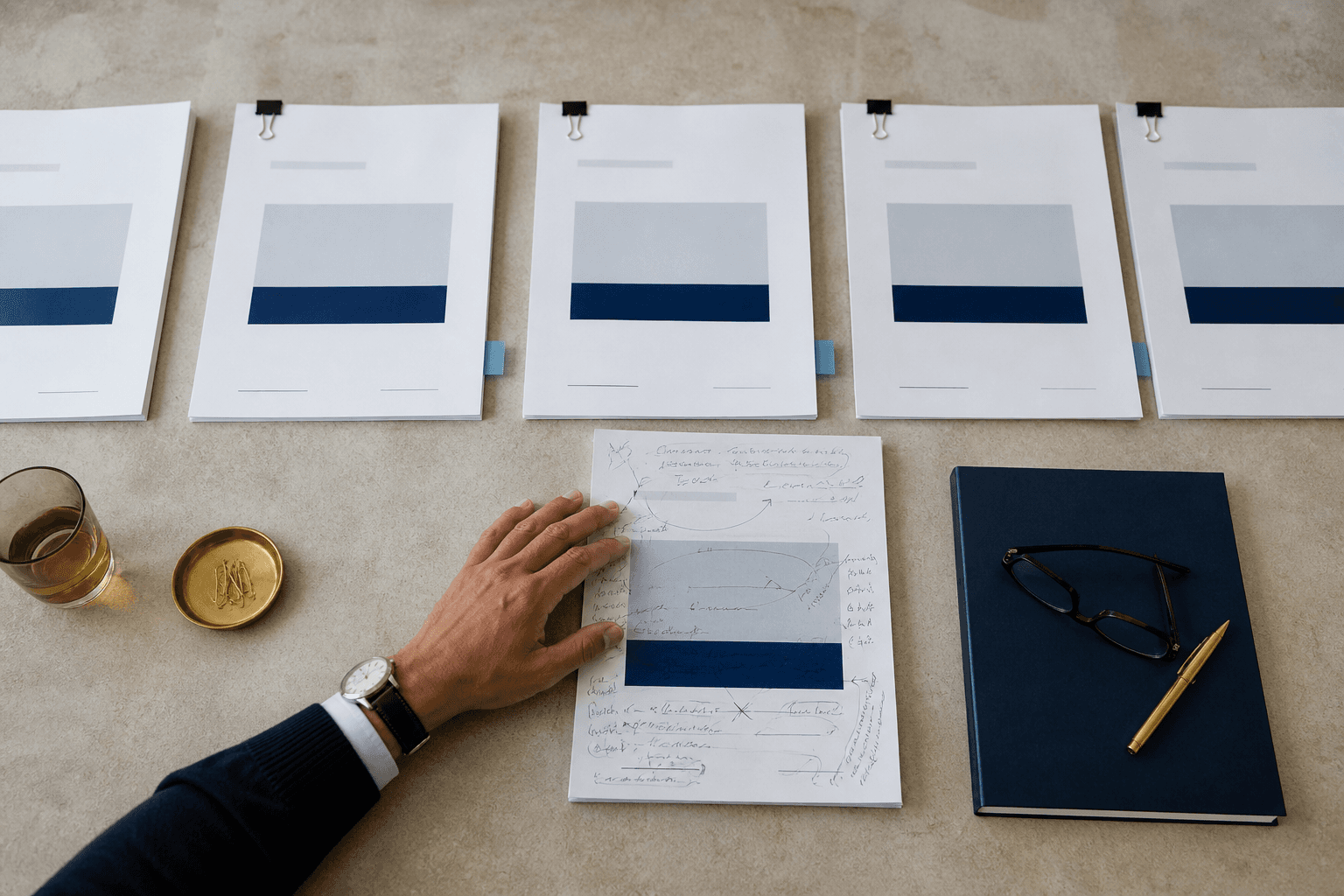
One ironic exception here is that one of the early champions of separating the work from the worker - Frederick Winslow Taylor - is one of the few acknowledged authors with his approach of scientific management being named “Taylorism”. This "disembodiment" of work may have, over time, pushed us to quiet that voice inside that seems to realize that there is something off about work done by a machine. Somewhere in our intuition, there seems to be a stable belief that important things about work are irreducibly human.
I think there is a plausible reason for that intuition. Human beings, and all life, has a limited lifespan and a limited physicality. Our whole way of being is centered around the fact that we have limited time and limited resources. So every action has to start because we wanted something (intention), and fit within the resources available. So picking, choosing, and abandoning, i.e., discretion, is fundamentally a part of us. Despite being a fundamental part of us, this discretion is not always describable. There are some actions where we seem to be able to articulate our discretion semi-accurately but, by and large, it materializes as automated or sub-conscious thoughts or moves that cannot be put into words. AI, or any technology, does not have the limitations in time and resources we have to contend with, at least not in any way that it is aware of. So it needs to simulate discretion that a person would have shown, in order for it to do a person's work.
But is a full simulation actually possible? Let us go back to milling here for a moment: an expert miller feels feedback from the metal block they are working on through their tool, whether the tool is simple or a machine. In a mostly inarticulable way, this feedback tells them of an emerging imbalance in the work that leads them to make an ever-so-slight adjustment to offset it. They can try to tell an apprentice about the adjustment they made and the apprentice may take notes, but its really only understood when the apprentice also feels the stimulus and fails or succeeds at adjusting to it. Across fields of work, a very determined documenter can build a low fidelity articulation of some of the actions that go into a given piece of work, but most of what makes the worker do the things they do is unarticulated, potentially mostly hard-coded as "experience". AI had only the articulated information - the limited dataset - to learn to simulate our discretion from. So its simulation tends to be limited too. So even if we marvel at the sophistication of this simulation, its limitedness is what we perceive as "not the real thing."
Despite this intuition that most of us have, automation is seemingly always proposed with confidence that it will lead to a full replacement of workers. Nearly every big milestone in the history of automation and scaling seems to follow a similar pattern: an ambitious proposal - often precipitated by new technology - for replacement, a push back focused on minimizing disruption to the specific workers who are in the previous paradigm, regulation aimed at achieving some but not all minimization, societal compromise that lets some of the automation through, and then a gradual understanding that even the compromised version of the automation was not as powerful as originally thought.
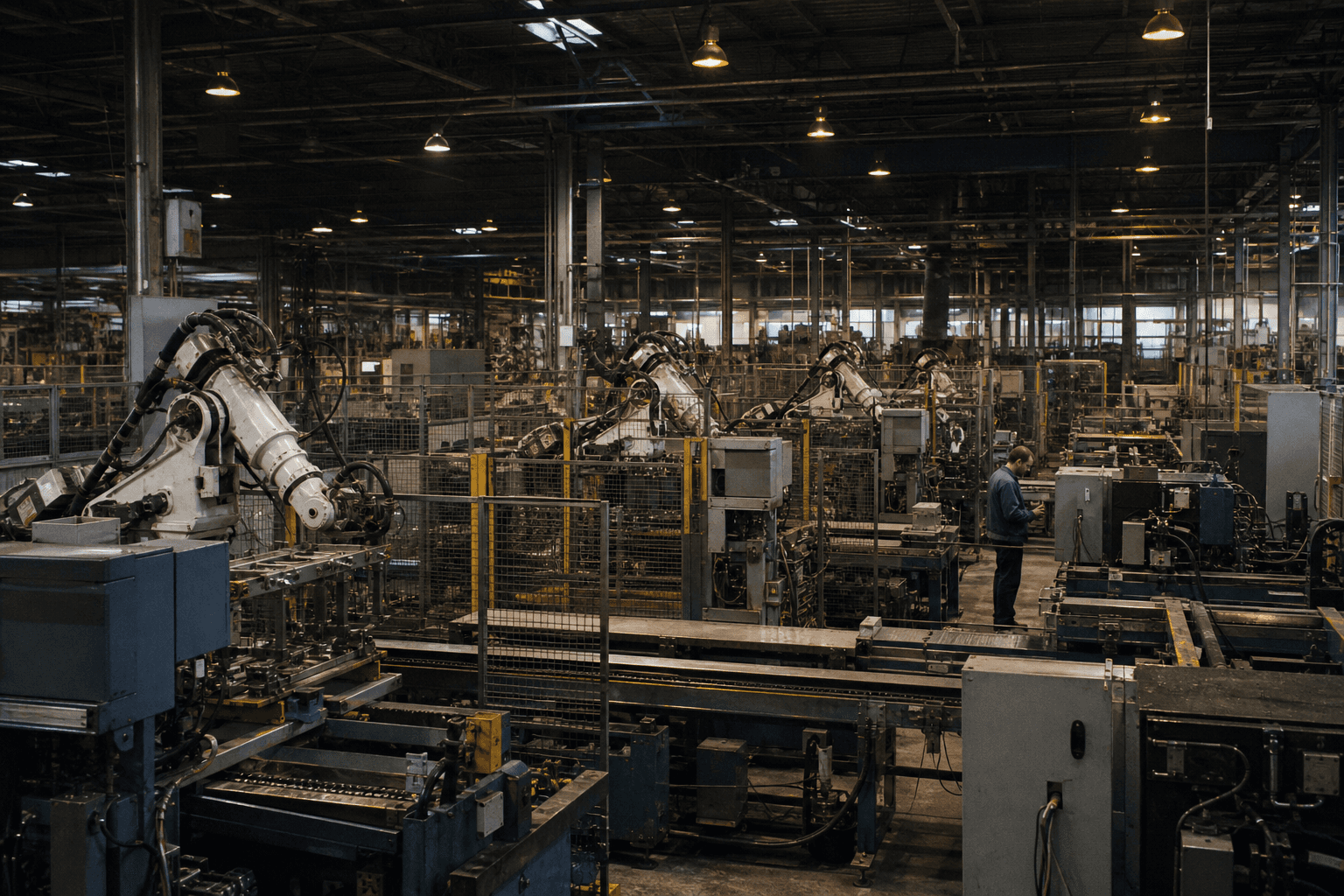
Taylor’s scientific management proposed taking the knowledge of a job almost entirely out of the craftsperson’s hands and putting it in management’s. Workers fought its stopwatches, speedups, and job losses. Congress limited the system in federal arsenals, but a milder version spread through industry. As commercial aviation automated the cockpit, the prospect of pilotless flight kept returning. Pilots pushed back against smaller crews and raised safety concerns; regulators kept two pilots on the flight deck while allowing automation to do more of the flying. In the 1980s, GM pursued the “lights-out factory.” Unions bargained over layoffs, retraining, and safety, and factories brought in robots piecemeal. The workerless plant never arrived.
The pattern itself may be fundamentally sound in many respects, and may have led us to important compromises that preserved genuine benefits. But the one relatively unquestioned piece of it seems to be that there is barely any push back focused on the framing that workers could be entirely replaced. On that front, there always seemed to have been a tacit agreement between supporters and detractors of a given technology that there was nothing wrong with the framing itself, only with the execution and timing.
A version of this tacit agreement may be visibly present in each of our individual histories too. We may individually make many choices with the framing that work is tangible thing to be learned and transferred, and not a thing that can be differently done by different people. My own framing of school was that it was a place where I would learn existing things that are there to be learned. I joined McKinsey eager to learn and apply a proven way to problem solve and influence companies. There is always a tangible thing to pick up, make a copy of, and add copies of other things to it to make a bigger thing. Though technically not inaccurate, it is a framing that always viewed work as being independent of people that did it. In reality, if I let myself dig under this framing, it should have been clear that the most impactful professionals around me (not always the same as the ones who were recognized as impactful) did their work a little differently, usually as a subtle dance between established traditions and immediate reality.
So why would we - the potential replacees - be so eager to tacitly facilitate, or at least not question, the fantasy of replacement? It might just be because we hold a very important common premise with the replacers. Like our physical world relies on the sun for order (days, years, seasons, climate), our work world seems to orbit around an idea of progress-as-an-end-in-itself. Under that idea, we all work for progress and not to create, so something that drives general work forward faster and in a higher volume - automation - is naturally immune to being questioned. Any opposition to automation tends to instead be focused on negotiating its pace, its disruptions, the distribution of its benefits, and who will be protected along the way.
Without the belief or at least a concession that work is irreducibly human (and maybe humans need to be engaged in purposeful work as a necessity to live), there is no compelling reason to see augmentation, as opposed to automation, as the natural vehicle for progress. If work itself, and not a human, is at the centre, what is there to augment?
Reading focus
Both supporters and detractors of AI seem to agree on one important thing - that it is permitted to replace us whether or not it actually can